Nx
nx graph — Reading Your Dependency Tree
Jun 2026
What running nx graph actually shows you about your monorepo, and why it's the fastest way to spot coupling and predict what nx affected will run.
One command changed how I understand our codebase:
npx nx graph
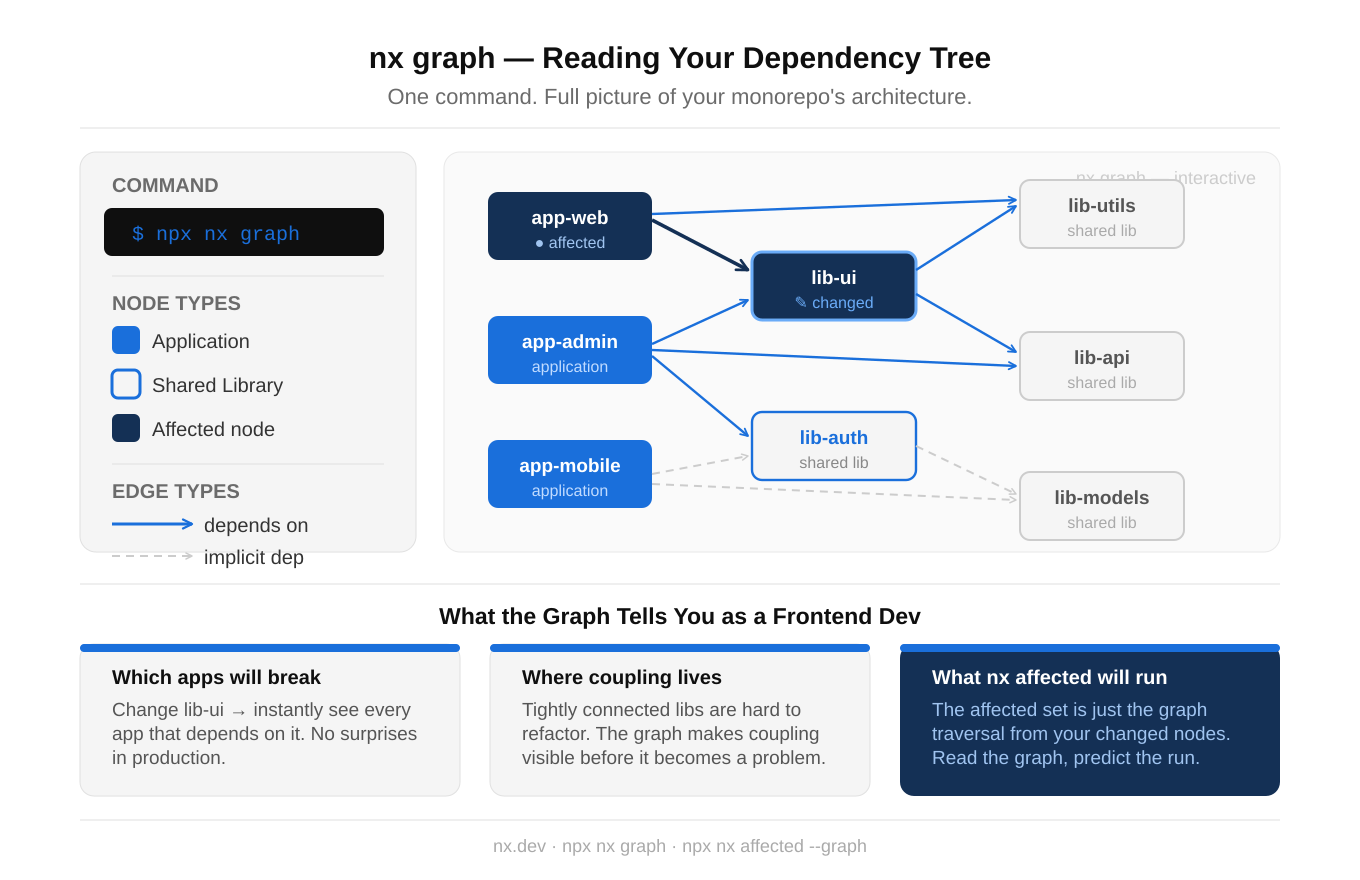
That's it. Open the browser, and the entire monorepo is laid out as an interactive dependency graph.
As a frontend dev, I used to mentally track which apps shared which libraries. After a while, that map only lives in your head — and it's always incomplete. The graph makes it explicit.
- Every edge, visible. Every app, every shared library, every dependency — who imports what, and in which direction.
- Blast radius, before you push. Change
lib-ui? The graph immediately showsapp-webandapp-adminboth depend on it, whileapp-mobiledoesn't. CI only rebuilds what's actually connected.
Three things I read from it now:
- Which apps will be affected, before I even push
- Where coupling is growing — tightly connected nodes are refactor warnings
- Why
nx affectedpicks the tasks it does — it's just a graph traversal
There's also npx nx affected --graph — the same view, filtered to only what your current branch touches. It's the fastest architecture overview you'll get on a monorepo you've just joined.